 Andrew Cheeseman
Don't buy a template for your event. Build the experience, and let AI do the heavy lifting on the front end
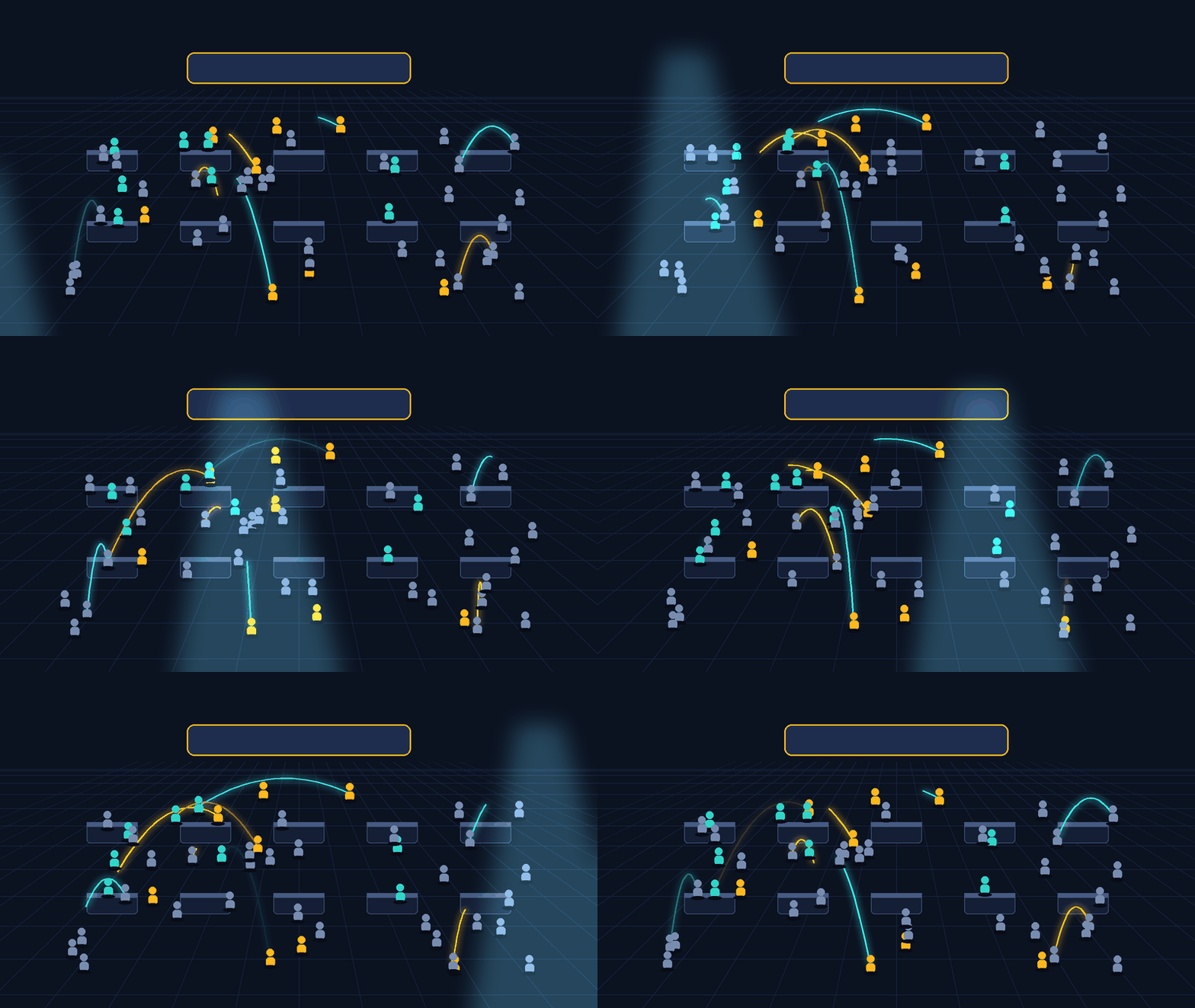
I spent years on the delivery side of big events, including the EMEA events team at Microsoft, and my team and I have spent the last few years building Radius, an event content management system (ECMS) for exactly this problem. So I have a slightly unfashionable view of AI at live events: the interesting part is not the chatbot in the app. It is what AI now makes affordable, which is an experience built for your event instead of a template that looks like everyone else's.
What is genuinely changing
Networking has overtaken content as the reason people come. Freeman's 2025 research, as reported by Event Tech Live, found 58% of attendees name networking as their top motivator, up from 39% in 2021. That is the opening AI matchmaking walks through: recommend the twelve people worth meeting rather than leaving 3,000 strangers to find each other at the coffee station. Clarion Events reports a 44% rise in in-person meetings from AI matchmaking. Treat that as a vendor-reported result, not a benchmark, but the direction is clear.
On-site, AI is mostly summarising and routing. Session summaries, attendee assistants, highlight reels, crowd-flow forecasting. Useful, incremental, and not where the money is.
After the event is where it pays. Event Tech Live's piece quotes Forrester on first-party behavioural data and RainFocus's view that automating post-event follow-up is the most promising near-term use of AI. Yet 55% of marketers say they don't get full value from event data, and only one in five has integrated the event platform with the wider marketing stack. That is an architecture problem wearing a marketing hat.
The UK adoption picture: wide interest, shallow depth
EventsAir's research (380 event professionals across EMEA, ANZ and North America, reported by TTGmice on 14 October) found 72% see AI as valuable or essential, and 26% aren't using it at all. Among those who do, marketing leads (62%), then data analysis (38%), with attendee engagement and personalisation both around 14%. Most firms use AI to write the email, and few use it to change the event.
The barriers they cite: lack of knowledge or expertise (63%), data privacy and security (53%), then budget (31%). Knowledge beats cost, the same pattern I saw in last week's small-business piece.
The money is there. Ei Advisory's 2026 report notes the IPA Bellwether for Q1 2026 had events as the leading category for increased UK marketing investment (net balance +14.7%), yet only 21% of B2B marketers can measure event ROI with confidence. Plenty of budget, thin evidence.
The gap nobody fills: the experience itself
Most organisers rent a registration platform and a template microsite, then bolt on an app. Registration is the easy, well-served part, and platforms such as RainFocus and Cvent do it well. What gets squeezed is everything around it: the invitation that feels like your brand, the agenda a delegate can actually plan a day with, the on-site screens, the thank-you that arrives while the memory is fresh. Those are where an event feels like yours, and templates flatten them.
Bespoke used to mean expensive and slow, which is why most people settled for the template. That is the thing that has changed.
Radius: bespoke by configuration, with AI building the front ends
Radius is the platform my team built to put content, people and schedule at the centre, and to deliver them as a branded experience at every stage of the event. As the Radius site puts it: your event, your content, your way. Registration is just the beginning. It runs on one platform through six modules (Event Blueprint, Content Core, Audience Concierge, Agenda Architect, Asset Suite and Event Evaluator) and syncs with registration systems such as RainFocus, so it sits alongside what you already use rather than replacing it.
Here is how I think about it across the three phases:
Pre-event: the invitation is the first impression. Personalised invitations and event sites, an agenda people can book into with capacity and waiting lists handled for them, and each attendee's profile and preferences captured early. This is where the Audience Concierge and Agenda Architect modules work, and where AI-matched recommendations ("sessions and people for you") have a profile to read.
On-site: one experience across phone, web and screens. The same content that drives the event website feeds a companion mobile app and the digital signage in the venue, from a single back office. Live photo and social feeds, notifications, and personalised agendas follow the delegate around the building. Signage can even be generated: Radius already produces custom AI-driven signage from the event's own assets.
Post-event: the story continues. Highlights, photo walls, recognition and follow-up communications built from the same content and the same attendee record, with Event Evaluator capturing feedback and turning it into insight while the event is still fresh. This is where that 55% of marketers who say they don't get full value from event data can change the answer.
The part that is new: AI builds the bespoke front end
The reason this now works is a design decision plus a tool shift. The design decision is an old one: keep the stable things (people, schedule, content, media) behind clean, well-described services and a headless content system, and treat every front end as a replaceable skin on top. The tool shift is that AI coding assistants are now genuinely good at the repetitive, high-volume work of building those skins: layout, components, theming, accessibility checks, variations for each phase of the event. A skilled engineer directs and reviews; the AI does the grind.
That changes the economics. A front end that once took a team weeks can be produced, reviewed and refined in days, so a new event can have its own look and feel and its own interactions without a new platform being written. It only works if the foundations are right, which brings me to the less glamorous part.
The technical part nobody puts on the stand
If you are building or buying, the AI features are the visible 10%. The hard 90% is:
- One identity for the attendee. Registration, badge scan, session app, lead capture and CRM each hold a slice. Matchmaking is only as good as the joined-up profile it reads. Define the canonical attendee record first.
- Events, not nightly batches. A suggestion that arrives after the person has left the hall is worthless. Check-ins, scans and session joins should flow as events into whatever scores and recommends.
- Consent as data, not as a checkbox. Matchmaking is profiling. Under UK GDPR you need a clear lawful basis and to tell people what the algorithm does with their data, and marketing follow-up brings PECR into play. The Data (Use and Access) Act 2025 is changing parts of the UK regime, so have your DPO check what applies to your event. Store consent per purpose and make the matching engine honour it at query time.
- Clean, well-authorised capabilities. This is what lets AI build front ends safely, and lets an agent later use a narrow tool such as "find sessions for this delegate" without being handed the database. The MCP lesson from two weeks ago applies directly.
- A human fallback. The best teams treat AI as what gets delegates to the right conversation, and people as what makes the conversation good. Chatbots should complement, not replace, human interaction.
- Review everything AI builds. Generated front ends still need human review for accessibility, security and brand. Speed is the gain, not the absence of judgement.
Who gets left behind
Not the firms without an AI budget. The firms whose event stack is a set of exports and spreadsheets stitched together the week before the show, and whose attendee experience is whichever template came with the registration tool. They can buy the same matchmaking widget as anyone and it will still recommend the wrong people, because it can't see the whole attendee. The gap between a regional UK show and a headline event is not the AI tool. It is how clean the data underneath is, and how much of the experience was designed rather than defaulted.
What I'd do before the next event
- Map where each attendee fact lives and who owns it. One page.
- Pick one moment to make bespoke (the invitation, the on-site agenda, or the post-event follow-up) and measure it against a 90-day window.
- Run a privacy review before launch, covering what is inferred about people, not only what is collected.
- Integrate the event platform with the CRM and the experience layer properly. It is the cheapest big win on the list.
To see what a bespoke, AI-assisted event experience looks like in practice, have a look at radius-ecms.com. And if you want an honest read on whether your own platform integrations can carry AI, my one-day review is built for exactly that: cheesesharp.com